
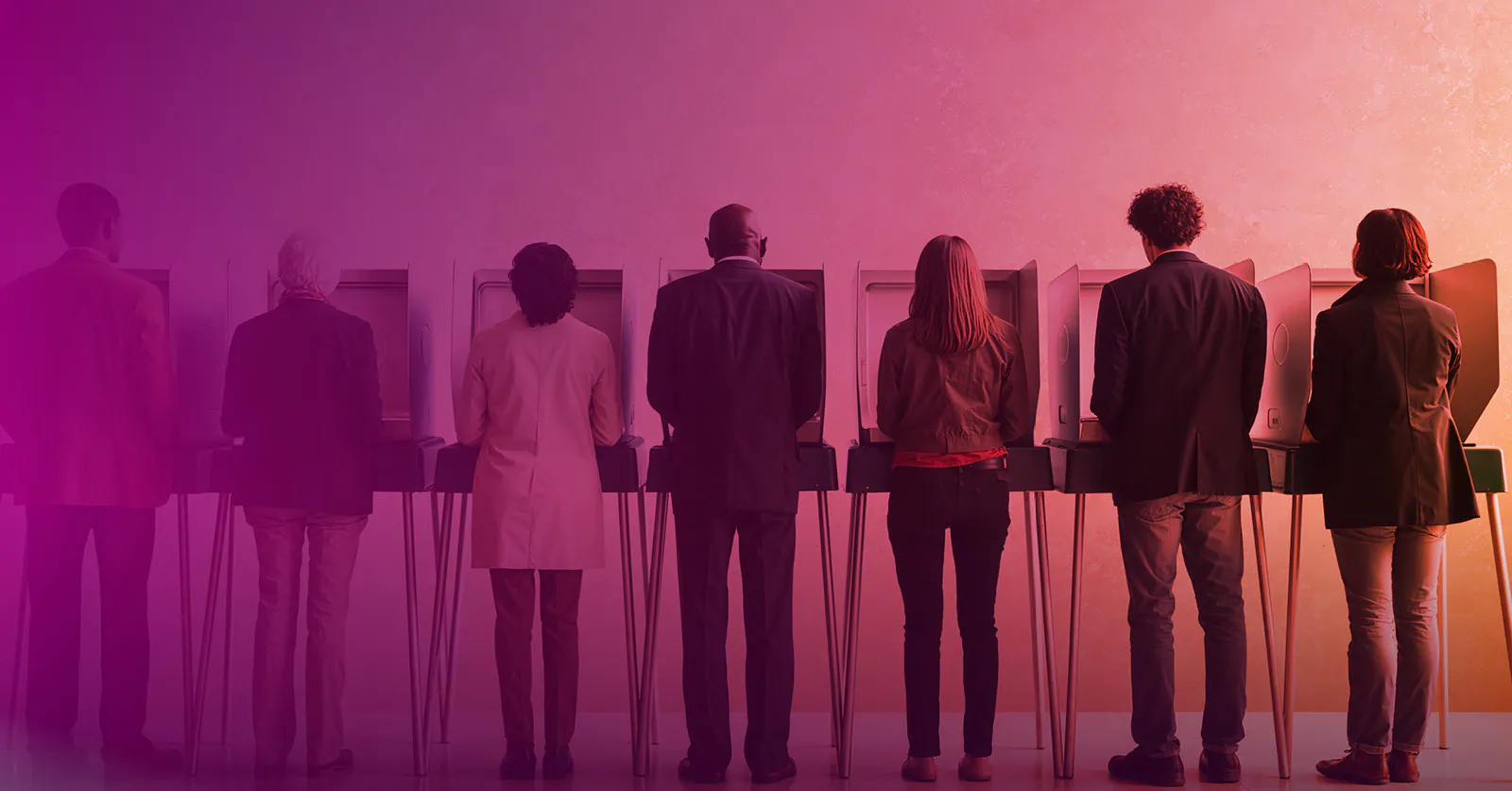
For the 2026 midterm cycle, political campaigns are grappling with how to find, persuade, and turn out the voters who matter all while attention continues to fragment and legacy campaign playbooks are aging out.
According to Axios, 2026 political ad spending is projected to set a midterm record of approximately $11B, with heavy investments in CTV and streaming. That makes execution even more critical in competitive Senate, House, gubernatorial, and ballot races.
Campaign teams know who their voters are, but how and when to reach them presents more complex challenges:
Which voters am I missing? Where can I find them? Where am I overspending? What questions do voters need answered? What media mix offers the highest incremental reach? How can I activate this intelligence while executing the campaign as efficiently as possible?
These are just some of the many challenges campaigns face in the lead-up to Election Day. We’ve outlined the top seven considerations for your teams as they enter this critical window. And for a deeper look at the cost of inefficient programmatic and how campaigns can get more from every media dollar, read our latest report.
1. Understanding the “why” behind voter behavior
Campaigns already have voter files, modeled audiences, donor data, and partisan segments. What they need is to identify persuadable, low-propensity, younger, multicultural, and politically disengaged voters, and importantly, get to know them beyond their political affiliations: their economic pressures, media habits, lifestyle, and motivations.
That broader context informs beyond targeting; it shapes creative, messaging, channel selection, and sequencing.
2. Reaching voters across a fragmented media landscape
Linear TV buys alone won’t cut it. Voters are now spending increased time across the open web, OLV, YouTube, social, and audio. Estimates put 2026 CTV political spending above $2.5B. Agencies need to prove they reached the right voters, not just how much they spent on media.
3. Frequency management and wasted spend
When buying happens across multiple DSPs, publishers, and platforms, campaigns risk overexposing easy-to-reach voters while missing others entirely. The opportunity lies in shifting from channel optimization to voter-level media optimization across channels.
4. Knowing what is actually moving voters
Clicks and impressions don’t equal voters at the polls. Campaigns need to focus efforts on incremental reach, persuasion, voter registration, turnout, donations, and ultimately, electoral impact. Agencies are under mounting pressure to prove which audiences, messages, channels, and combinations are driving incremental value, not simply capturing support that already existed.
5. Speed in the home stretch - especially in the final 30–60 days
Political campaigns operate on extremely compressed timelines. Polling changes, opposition attacks, news events, endorsements, fundraising, and voter sentiment can shift overnight, making the journey from signal → insight → audience → activation critical. An audience insight that takes two weeks to activate may have limited impact during the final two weeks of a campaign.
6. Inventory, pricing, and competitive pressure
Record political spending is intensifying competition for premium inventory, especially in battleground markets. Agencies are balancing inventory availability, rising CPMs, premium CTV/video, and incremental reach.
7. AI, misinformation, compliance, and safety
AI paradoxically presents a huge opportunity and a major risk. Campaigns can create and iterate creative faster, but deepfakes, synthetic voices, disclosure requirements, and a growing patchwork of state laws mean serious compliance concerns. More than 30 states now regulate some forms of political deepfakes and synthetic media, adding complexity for political agencies.
There’s one through line threading these campaign pain points: campaigns need to turn fragmented data and behavioral signals into smarter, faster media decisions.
And there’s one operating system that can do just that.
MiQ Sigma connects voter intelligence with watching, browsing, searching, and buying behaviors. It processes 700T signals of data from over 600+ data feeds to decode the modern voter—helping campaigns find incremental voters, maximize reach, manage frequency, act on real-time signals, and optimize every media dollar across channels.
This cycle is about turning insights into impressions that drive real impact. Read our latest report to learn how partnering with MiQ will make all the difference on Election Day.