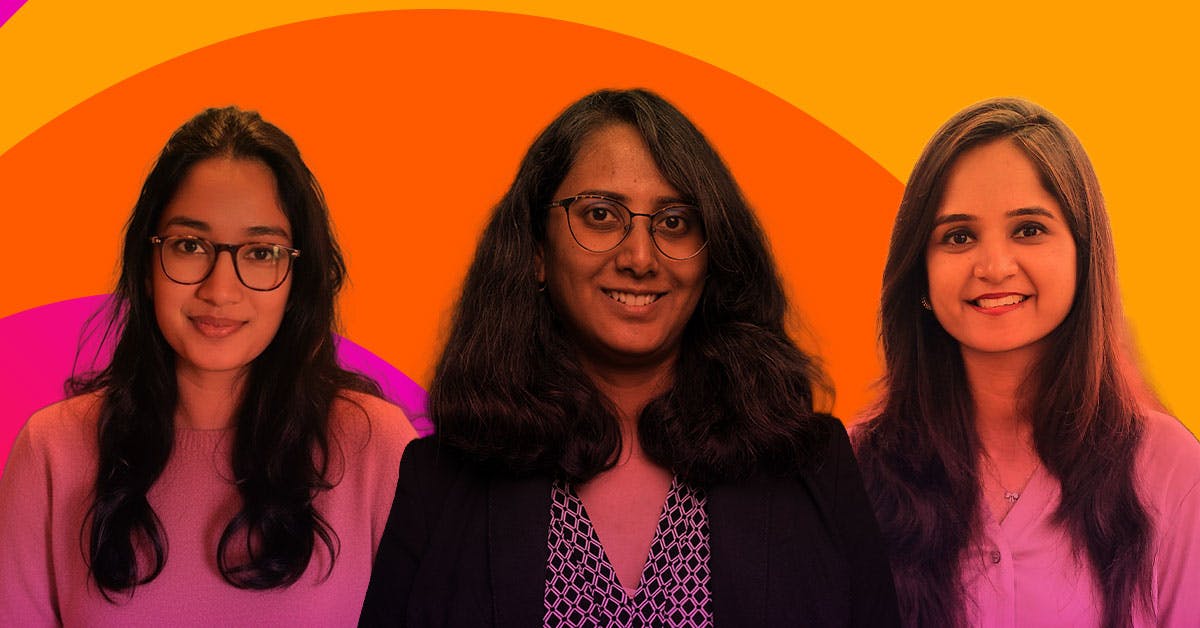
Ability iQ is one of our ERGs that help to create the welcoming and inclusive culture we have here at MiQ. Three leaders of the ERG, Renu Rochlani, Samgnya Shamasunder and Deepali Sahu, opened up about why Ability iQ is so vital to the business, and what they’re doing everyday to make sure we nurture inclusion.
What has Ability iQ done to make MiQ more inclusive for people with different abilities?
Inclusion can't exist in silence. We realized there was a barrier separating our colleagues from the PWD (People with Disabilities) community, but it wasn’t as simple as a lack of communication. It was something far more human: fear. The hesitation stemmed from a deep-seated fear of saying the “wrong” thing or not reacting “appropriately”.
It was then that we knew we needed to influence people, not just policy. So we took action. We launched 'Signlusion’ (an initiative teaching MiQers Indian Sign Language and offering corporate mentorship to hearing-impaired individuals) and what started out as a program became a movement. 25% of our CoE didn't just learn a few signs; they built the confidence to connect. We built a cohort of true advocates, which in turn helped us successfully place 94 deaf students into professional roles. Our goal has been, and continues to be, to move beyond awareness and into active allyship, and we are determined to keep working on it.
How do simulation games nurture inclusion?
They allow people to feel what everyday life can be like for someone with a disability. When employees try reading Braille, draw while looking in a mirror, navigate blindfolded, or learn basic sign language, it stops being theory and becomes a real, eye-opening experience.
These activities break stereotypes, spark empathy, and get people thinking: “wow, small things can be big barriers.” They also show how simple adjustments like clear communication, accessible spaces and thoughtful design can make a huge difference.
Most importantly, the experience encourages employees to be better allies. It opens up conversations, builds confidence in interacting with colleagues and community, and strengthens the culture of inclusion across the organization.
These games make inclusion real, memorable, and human.
What are you working on to improve accessibility to MiQ’s products, offices, and hiring?
We’re tackling accessibility on two key fronts: the digital and the physical. First, the physical. You can’t nurture a culture of belonging if a colleague has to second-guess something as fundamental as whether the office is built for them. We’re actively working to re-architect our physical spaces, starting with making our washrooms truly disability-friendly. It’s a practical, non-negotiable statement: this space was built for you. We are also auditing some of our physical offices in the US to ensure they are not just compliant, but welcoming and functional to all.
Second, the digital. This is where our 'unique perspectives spark innovation’ pillar comes to life. We’re collaborating with our product teams to embed accessibility features directly into our core Sigma platform. This isn't just a 'nice to have' or a compliance fix, but a strategic move to tap into the 'purple economy’. We're shifting our perspective from viewing accessibility as an accommodation, to seeing it as a massive competitive advantage.
In what three ways does your ERG help to nurture MiQers?
We help MiQers learn, speak up, and get involved, so inclusion isn’t just a value on paper, but something everyone can live and experience every day.
Our ERG creates space for MiQers to learn about different disabilities in a real, relatable way, through workshops, simulation games, speakers, and conversations. We help people understand real-life experiences, break misconceptions, and build everyday empathy.
We bring MiQers together for volunteering, learning, challenges, and awareness campaigns. These activities make inclusion interactive and fun while creating a community that supports one another, and empowers people to act.
How did the first Rise summit help to celebrate your work as a leader and the work of the ERG?
Leading an ERG is a passion project. You’re often pushing for change and pouring your heart into it. When you hit a wall, which you inevitably do, you ask yourself “am I qualified for this?” or “is this idea just too ambitious?”
The Rise summit was like walking into a room and realizing you weren't shouting into the void. It was a profound, collective exhale.
Suddenly, my shortcomings weren't my failures; they were shared challenges. The summit didn't just celebrate our work. It celebrated us as leaders by creating a support system. It was the reassurance that yes, this work is hard, but we are not in it alone.
How do you personally nurture your own passion for progress?
As leads, nurturing our passion for progress starts with staying grounded in why we do this work. We hold on to a very clear vision, one we set for Ability iQ from the beginning. We want to live in a world where accessibility is as natural and unconscious as wearing glasses. Glasses aren’t considered ‘special accommodations’. They’re just tools that help people move through their day without a second thought. Why should it be any different for the PWD community?
That image keeps us going. When the work gets heavy, after a tough budget meeting, a project delay, or the usual uphill climb, we simply return to that vision.
We also stay fueled by staying connected to the people we serve. Hearing real stories, engaging with the community, learning about evolving accessibility practices, and seeing the impact of our initiatives all keep our curiosity alive. Every mindset shift, every conversation, every person who feels seen or supported reminds us why we started this journey.
For us, a passion for progress is a mix of clarity, purpose, and continuous learning. It’s what keeps us building, advocating, and pushing forward until accessibility isn’t an exception, it’s simply the norm.
_____
Want to discover more about inclusion that nurtures and hear from other MiQers? Head to our dedicated landing page.


