

The way we watch TV has changed radically since the pandemic, and this has had a knock-on effect on the consumer journey. In early 2020, Netflix gained 15.7 million users, and weekly streaming minutes more than doubled. With the continuation of the binge-watching boom and subscription growth, we’re seeing more and more consumers making the switch from traditional linear TV to OTT. (Consumers have gone from watching fewer than 2 hours of OTT a day to nearly 5).
And since COVID-19, watching content is no longer a case of just one screen. Second screen viewing has become the norm, with people watching different platforms across different devices (sometimes at the same time), and using second screens to browse and shop while watching. Continued lockdowns saw e-commerce soar, as consumers were forced to stay home while shopping. And now the consumer journey has changed forever.
Consumer journeys have become fragmented. People jump between screens while watching content, shortening the purchase journey from a matter of weeks or days, to just hours or minutes.

Unlock watching browsing and buying. Download the report
Second screen viewing
91% of consumers have used a second device while watching connected TV or streaming video and half say they do so most of the time.
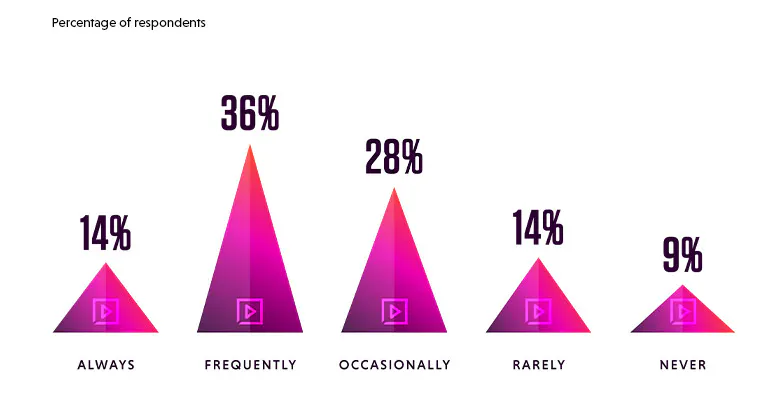
The majority of people we surveyed for our 'From funnel to flexibility' report in January 2026 said they use a second device while watching CTV - and half say that’s their default state. 86% said that they at least occasionally switch between totally different digital activities within the same hour - from searching and checking socials, to viewing videos on their second screen. Nearly half (48%) said they either frequently or always use a second device, like a phone or laptop, while streaming video.
What does second screen viewing mean for CTV advertising?
It’s not a matter of capturing consumer attention, but determining what stage of the consumer journey they’re in while their attention is split. Predictably, shifting between online activities is most common among younger consumers. 1 in 5 consumers between 18 and 34 say they’re always second screening while watching TV or streaming. As this audience ages and their buying power increases, this will become a key pattern of behavior to bear in mind for effective CTV advertising.
Watching is the most common state - and the stickiest
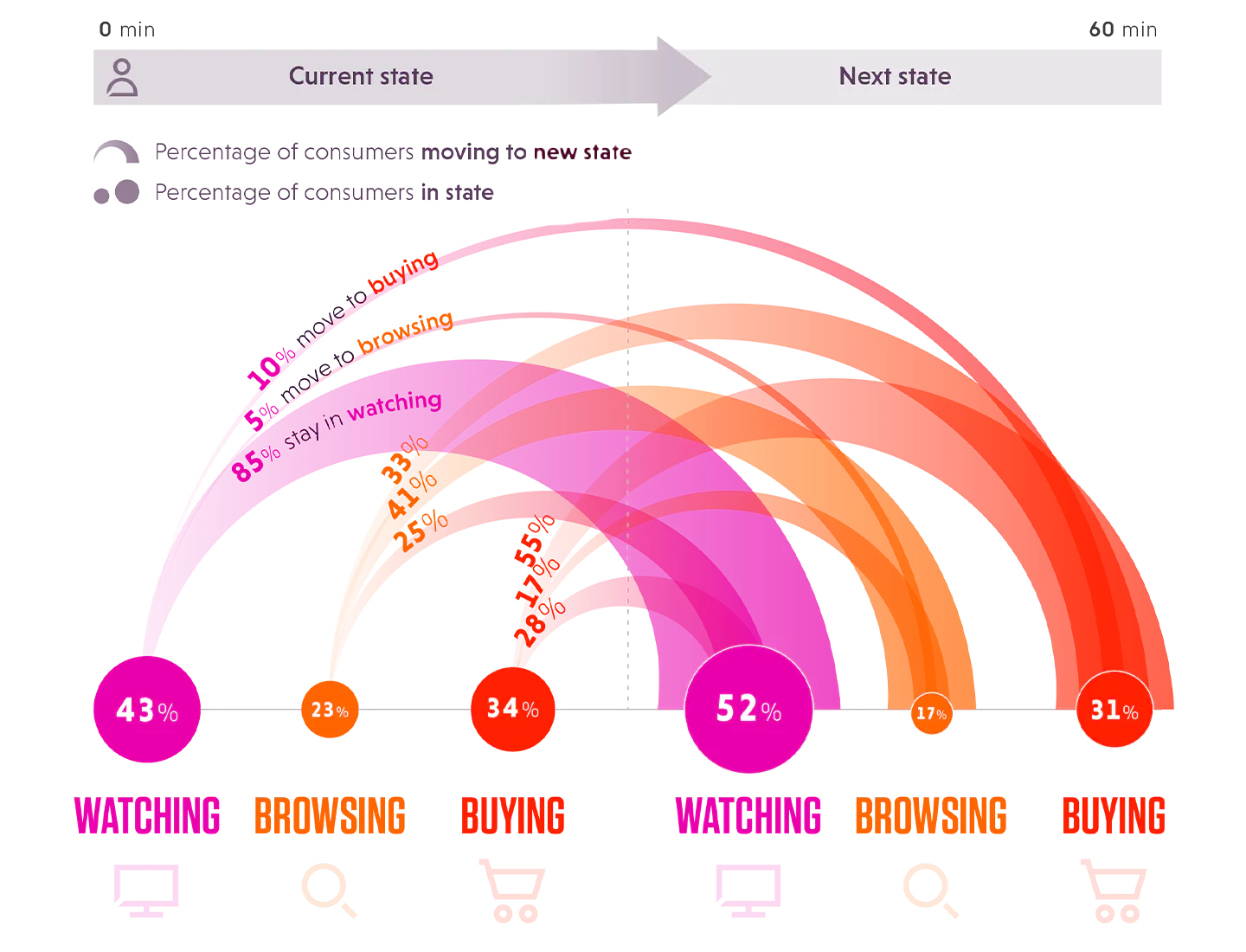
In a given week, 43% of the time advertisers can reach a consumer will be while they’re watching video content, either on a connected TV or other device. And consumers are still likely to be watching when we check back 30 minutes or an hour later. However, in a given hour 15% will peel off, moving to either a browsing state (5%) or a buying state (10%).
But even when they’re in this watching state, it’s likely they’re also browsing, buying, or even second screen viewing. In a given hour, as many as 10% of consumers are using 2 devices at the same time, the most common option being a mobile device (69%).
Nearly half (47%) of consumers using a mobile device while watching TV or streaming video is shopping - browsing online stores, researching products, checking prices, or buying something.
When second screening, consumers are most likely to be scrolling through social media, reading the news, or watching short-form video content, like TikToks and Instagram Reels. This activity is usually unrelated to whatever they’re watching on TV, and makes up more than 40% of activity. Another 25% will be using their phones to browse online stores, check prices, or purchase items unrelated to what they’re watching. And 22% say they’re looking up products related to what they’re watching.
This quickly shifting consumer journey means that many people are often ready to slip into a purchase - or abandon one - at a moment’s notice: 76% of consumers say they’re likely to abandon a purchase if a website is slow or the checkout is complicated (in-line with industry benchmarks for cart abandonment rates).
This is good news for measurement, as trying to measure attribution for CTV advertising can be tricky. In fact, 68% of consumers say they do most of their TV/video watching on a smart TV or streaming device.
When you're watching TV or streaming video, how often are you also using another internet-connected device? (eg. mobile, tablet, laptop)
Most consumers regularly watch 1-3 streaming services, and 1 in 4 say that the ability to skip or avoid ads is a key decision in their choice of services. Nearly half (45%) say they skip or avoid ads whenever possible.
Ad-free streaming on CTV
For 24% of consumers, the ability to skip or avoid ads is a key factor in choosing a streaming service.
For years now, ad-free options on streaming services have presented a divide in the consumer space: the more affluent and valuable consumers can effectively opt out of ads, turning CTV advertising into a tax on less well off viewers. For advertisers, this shifts the demographics of who can still be effectively reached by advertising. However, we now know that many of these ad-free viewers will likely be second screening while watching TV, making them reachable on that device.
How can CTV advertising tune into watching, browsing and buying?
The average consumer spends more than 6 hours online every day, and one third to one half of that time is spent watching video. (That’s 40+ hours per week). This creates new challenges for advertisers as they try to adapt their strategies across the new consumer journey: watching, browsing and buying. Cross-device plans aren’t enough, as they also need a way to track and target consumers as they move between these states. This is where AI-powered tech can make a huge difference.
How MiQ Sigma simplifies the modern consumer journey
MiQ Sigma brings the latest advanced AI models and a Data Spine of 700+ trillion data signals across what your audience is watching, browsing and buying. Sigma can unify your data, media, and platforms to understand the modern consumer and drive faster, more customized decisions about your media buys, and truly move the needle on your business goals.


